Calorie Deficits
The Only Way To Lose Weight

Cautions About Oversimplifying
Saying “just eat less and move more” ignores biology, psychology, and social realities. The human body does not behave like a simple calculator. Hunger hormones respond to restriction, metabolic rates adapt downward, and psychological factors like stress, trauma, and social support can make or break long-term success. Oversimplification can lead people to believe they are failing because of willpower, when in fact they are battling powerful biological and social forces.
Hormonal Influence
Hormones such as insulin, leptin, ghrelin, cortisol, and thyroid hormones all interact with energy balance. Insulin is often misunderstood as “the fat-storage hormone.” In truth, it helps shuttle nutrients into cells and works in cycles that align with meals. Leptin communicates satiety to the brain, but leptin resistance can develop in obesity, leading to persistent hunger. Ghrelin signals hunger and often rises during dieting, driving the desire to eat. Cortisol, often elevated during stress, can increase cravings and promote fat storage. Thyroid hormones regulate metabolic rate and can slow down in long-term dieting. These hormonal dynamics don’t break the law of energy balance, but they influence how easy or difficult it is to maintain a deficit.
Lifestyle Influence
Lifestyle factors such as sleep, stress, alcohol use, and social environment strongly affect calorie intake and expenditure. Poor sleep reduces leptin, increases ghrelin, and makes calorie control harder. High stress often triggers emotional eating or a preference for high-calorie comfort foods. Social events frequently revolve around food, making tracking or moderating intake challenging. A lifestyle approach acknowledges that weight loss is not just about math—it’s about aligning daily habits with biological needs.
Too Much Emphasis on Exercise
Exercise is essential for health, but it is often misrepresented as the primary driver of fat loss. Running on a treadmill for an hour may burn 500 calories, which can be undone in minutes by eating a dessert. People who rely solely on exercise often become discouraged when results stall. Exercise should be framed as a tool for preserving muscle mass, improving insulin sensitivity, supporting cardiovascular health, and contributing to the calorie deficit, but not as a replacement for nutrition management.
Not Enough Emphasis on Nutrition
The foods people eat are the largest variable in energy balance. Nutrient-dense foods such as lean proteins, vegetables, fruits, legumes, and whole grains support satiety and health while making deficits sustainable. Highly processed foods—dense in calories, low in fiber, often engineered for overconsumption—work against weight loss. Many people underestimate how much they eat, particularly with high-calorie liquids or “healthy” foods eaten in excess. Nutrition is where most of the leverage for fat loss lies.
Track or Don’t Track
One of the most debated strategies is whether to count calories and macros. Some people find tracking empowering: it reveals hidden calories, provides structure, and creates accountability. Others find it stressful or unsustainable long term. Both groups can succeed, but people who track—even loosely—tend to experience better short-term results. Non-tracking approaches often work best after someone has built a strong foundation of food awareness.
Trackers Have a Higher Success Rate
Research consistently shows that people who use food logs, apps, or journals lose more weight and keep it off longer than those who don’t. Even logging three to four times per week is associated with improved outcomes compared to no tracking at all.
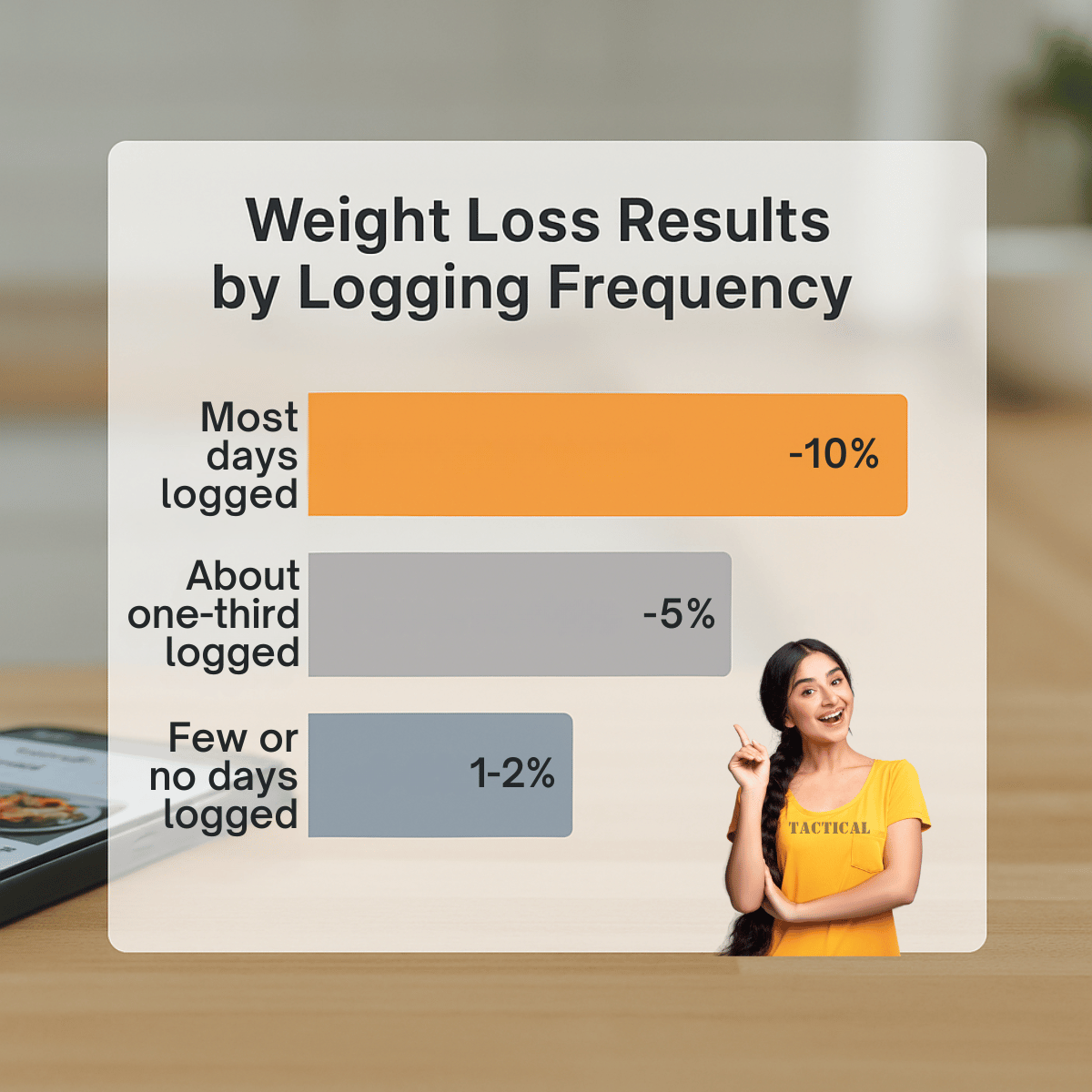
The advantage of tracking is not just about numbers—it’s about awareness. When people see their intake in black and white, they learn portion sizes, calorie densities, and the trade-offs of different choices. Over time, this awareness can make intuitive eating more realistic.
Six Weeks to Start Building Habits
Behavioral research suggests that it takes about six weeks of consistent effort for a new habit to begin to feel automatic. This is why many weight-loss programs are structured around short windows such as six or twelve weeks. While permanent change requires more time, the first six weeks are often enough to prove to yourself that change is possible. Small wins, like losing a few pounds, learning to prep meals, or drinking more water, compound into larger lifestyle shifts.
Obesity and Weight Management Are a Lifetime Commitment
Obesity is not a short-term problem with a quick fix. Weight management must be viewed as a lifelong process. That doesn’t mean dieting forever, but rather adopting a lifestyle where weight control becomes easier over time. People who maintain weight loss long term often describe it as “getting easier” once they develop new defaults—choosing water instead of soda, preparing meals instead of ordering fast food, or exercising regularly without needing motivation each time. The body may defend against weight loss by lowering energy expenditure, but over years, people can stabilize at a healthier weight through consistent practices.
Get a Partner You Can Trust to Be There
Accountability dramatically improves outcomes. Whether it’s a coach, friend, partner, or online community, having someone to share progress with reduces isolation and increases persistence. People are social creatures; they thrive when supported and falter when alone. A trustworthy partner can encourage you on bad days, celebrate wins on good days, and remind you why you started when motivation fades.
Conclusion
A calorie deficit is the only path to weight loss. That statement is biologically non-negotiable, but the way individuals arrive at and sustain a deficit is personal. Hormones, lifestyle, social factors, and psychology all influence the experience of dieting. Exercise matters for health and body composition, but nutrition carries more weight in creating and sustaining the deficit. Tracking improves success rates, but habits—not temporary restrictions—determine long-term outcomes. Six weeks can build momentum, but lifetime commitment brings lasting results. And no one should attempt the journey alone: trusted partners and communities make the process sustainable. The science is clear, but the practice is human.
Updated: September 26, 2025 13:11
Category: Nutrition
Keywords: weight loss obesity calories metabolism
References
Hollis, J. F., Gullion, C. M., Stevens, V. J., Brandon, P. S., & Vollmer, W. M. (2008). Weight loss during the first 6 months of the Weight Loss Maintenance Trial. American Journal of Preventive Medicine, 35(2), 118-126. https://www.eurekalert.org/news-releases/883606
Berry, R., Kassavou, A., & Sutton, S. (2021). Does self-monitoring diet and physical activity behaviors using digital technology support adults with obesity or overweight to lose weight? A systematic literature review with meta-analysis. Obesity Reviews, 22(2), e13306. https://www.researchgate.net/publication/352888467_Does_self-monitoring_diet_and_physical_activity_behaviors_using_digital_technology_support_adults_with_obesity_or_overweight_to_lose_weight_A_systematic_literature_review_with_meta-analysis
Burke, L. E., Wang, J., & Sevick, M. A. (2011). Self-monitoring in weight loss: a systematic review of the literature. Journal of the American Dietetic Association, 111(1), 92-102.
Patel, M. S., Hopkins, C. M., Brooks, T. G., & Bennett, G. G. (2019). Comparing self-monitoring strategies for weight loss in a smartphone app: Randomized controlled trial. JMIR mHealth and uHealth, 7(2), e12209. https://www.researchgate.net/publication/49709548_Self-Monitoring_in_Weight_Loss_A_Systematic_Review_of_the_Literature
Tuerk, P. W., & Tuerk, C. M. (2017). A longitudinal study of predictors of weight loss and maintenance in a commercial weight loss program. Health Psychology and Behavioral Medicine, 5(1), 162-177. https://mhealth.jmir.org/2019/2/e12209/
Comments
You must log in to post a comment.